Why Hard Water Stains Keep Coming Back (And How to Get Rid of Them for Good)
July 14, 2025
If you've ever cleaned your windows only to find cloudy, white spots reappearing within days, you're not alone. Florida homeowners and business owners face a constant battle against hard water stains – those stubborn mineral deposits that seem to multiply faster than you can remove them. At Fresh Frames Windows, we've mastered the science of hard water stain removal and prevention across Palm Beach, Broward, Miami-Dade, and Hillsborough counties.
Understanding Hard Water: Florida's Persistent Challenge
What Makes Florida's Water So Hard?
Florida's water supply is notoriously mineral-rich, containing high concentrations of dissolved minerals that create what we call "hard water." The state's unique geological composition, with limestone aquifers and underground rock formations, naturally infuses water with minerals that eventually find their way onto your windows.
Primary Minerals in Florida Water:
Calcium carbonate: The most common culprit, leaving white, chalky deposits
Magnesium: Creates cloudy, film-like residues
Iron: Produces reddish-brown stains, especially in well water
Silica: Forms glass-like deposits that are extremely difficult to remove
Sulfur compounds: Can create yellowish stains with distinct odors
The Science Behind Hard Water Stains
When mineral-rich water evaporates from your windows, it leaves behind concentrated mineral deposits. This process happens constantly in Florida due to:
Environmental Factors:
High temperatures accelerating evaporation
Frequent rain showers leaving mineral residue
Sprinkler systems repeatedly depositing minerals
Humidity creating condensation cycles
Coastal salt spray combining with minerals
The Evaporation Cycle:
Water containing dissolved minerals contacts your windows
Heat and sun cause rapid evaporation
Minerals remain to the glass surface
Repeated cycles create layered, hardened deposits
Stains become increasingly difficult to remove over time
Why DIY Methods Keep Failing
The Temporary Fix Problem
Most homeowners try common household remedies that provide temporary relief but fail to address the root cause. These methods often:
Create More Problems:
Vinegar and lemon juice: Acidic solutions that can etch glass over time
Baking soda: Abrasive properties that can scratch window surfaces
Commercial cleaners: Often contain harsh chemicals that damage window frames
Razor blades: Risk of permanent scratches and safety hazards
Pressure washing: Can force water into window seals and frames
Provide Only Surface-Level Cleaning:
Remove only the top layer of mineral deposits
Fail to address embedded stains
Don't prevent future mineral bonding
Leave microscopic residue that attracts more minerals
Miss areas that require professional-grade equipment
The Recontamination Cycle
Even when DIY methods appear successful, hard water stains return quickly because:
Incomplete Removal:
Mineral deposits embed deeply into glass pores
Standard cleaning tools can't reach all affected areas
Residual minerals act as "seeds" for new stain formation
Cleaning solutions leave their own residue
Improper technique spreads minerals rather than removing them
Professional Hard Water Stain Removal: The Fresh Frames Approach
Advanced Cleaning Technology
At Fresh Frames Windows, we use specialized equipment and techniques specifically designed for Florida's hard water challenges:
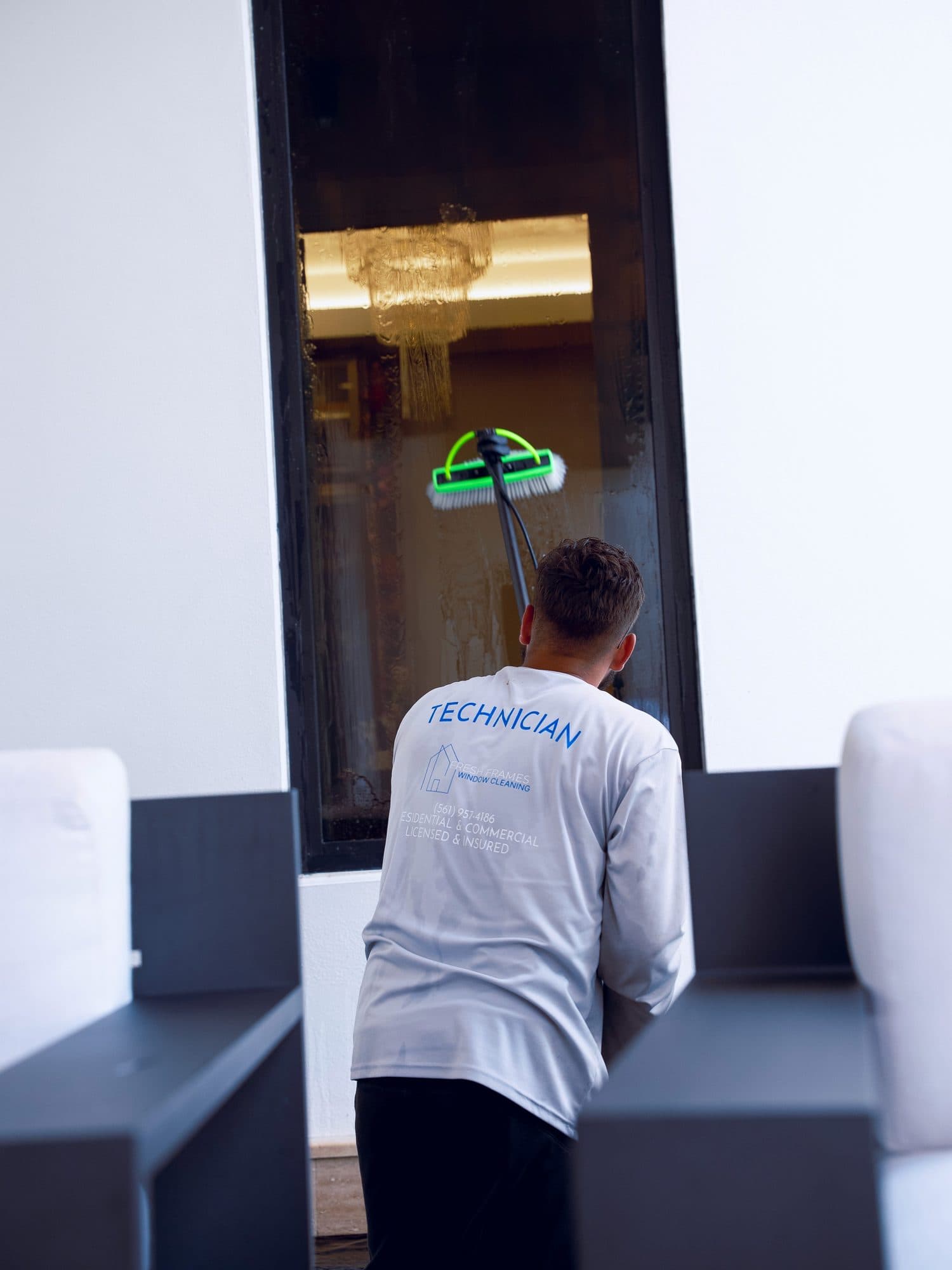
Water-Fed Pole Technology:
Deionized water systems: Remove all minerals before cleaning
Pure water cleaning: Prevents recontamination during the cleaning process
Specialized brushes: Designed to break down mineral deposits without scratching
Controlled pressure: Ensures thorough cleaning without damage
Spot-free drying: Eliminates mineral redeposition
Professional-Grade Solutions:
Acid-based cleaners: Specifically formulated for mineral dissolution
Neutralizing agents: Ensure complete removal of cleaning residues
Eco-friendly options: Safe for landscapes and family areas
The Fresh Frames Multi-Step Process
Step 1: Assessment and Preparation
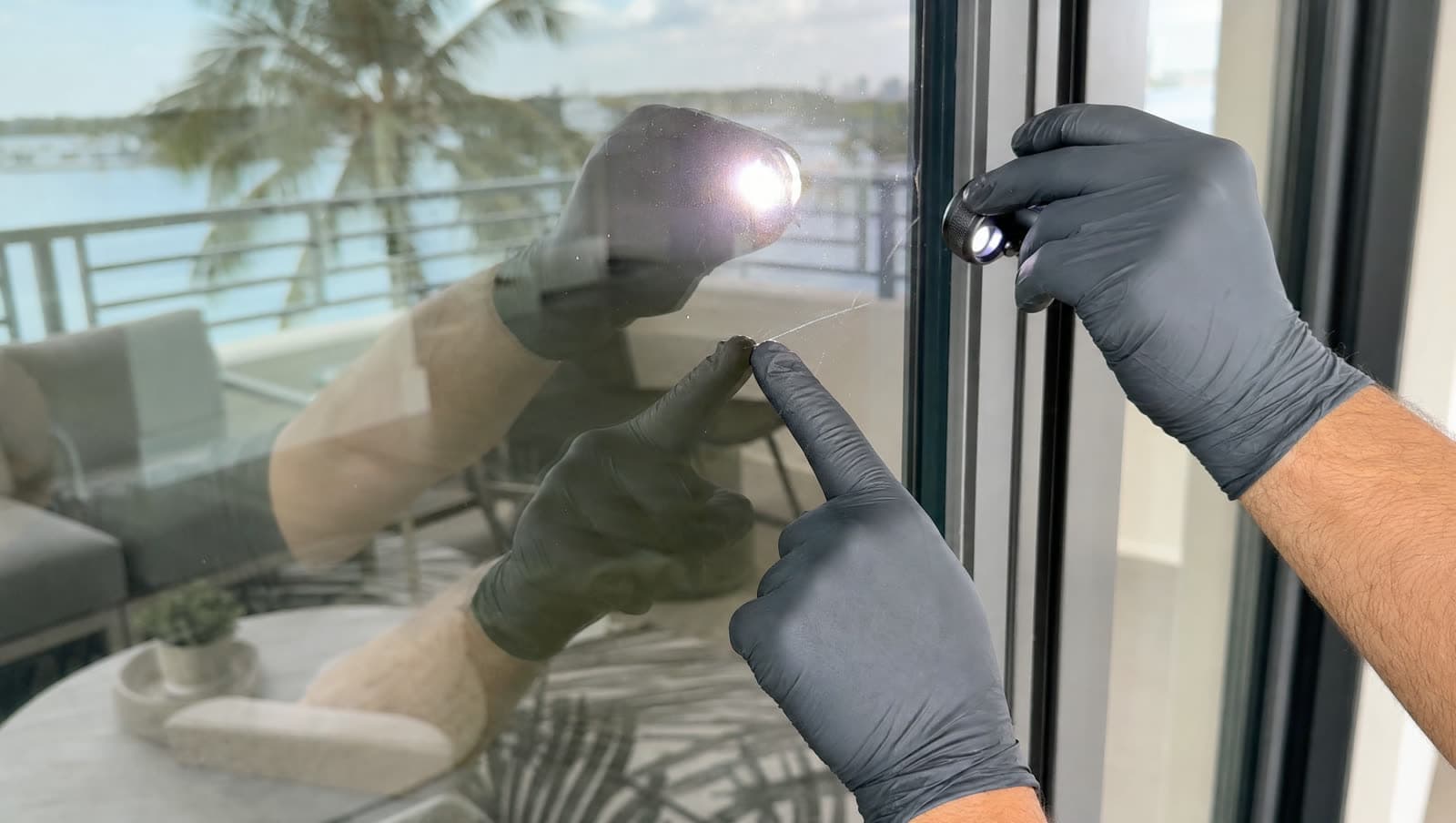
Identify the type and severity of mineral deposits
Test glass composition to determine appropriate cleaning methods
Protect surrounding areas from cleaning solutions
Document before conditions for quality assurance
Step 2: Pre-Treatment
Apply specialized mineral-dissolving solutions
Allow proper dwell time for chemical action
Use soft-bristled brushes to agitate stubborn deposits
Focus on heavily affected areas requiring extra attention
Step 3: Mechanical Removal
Utilize professional-grade tools designed for mineral removal
Employ proper technique to avoid glass damage
Work systematically to ensure complete coverage
Remove all loosened mineral deposits
Step 4: Pure Water Rinse
Rinse with deionized water to prevent recontamination
Ensure complete removal of cleaning solutions
Verify no residue remains on glass surfaces
Prepare surface for protective treatment
Step 5: Protective Application
Seal glass surfaces to prevent future mineral bonding
Provide ongoing maintenance recommendations
Schedule follow-up services for optimal results
Ready for a spotless property?
Get a free, no-obligation estimate — backed by our Spotless Promise — free re-clean within 72 hours.
Get My Free Estimate