
What hard water stains actually are
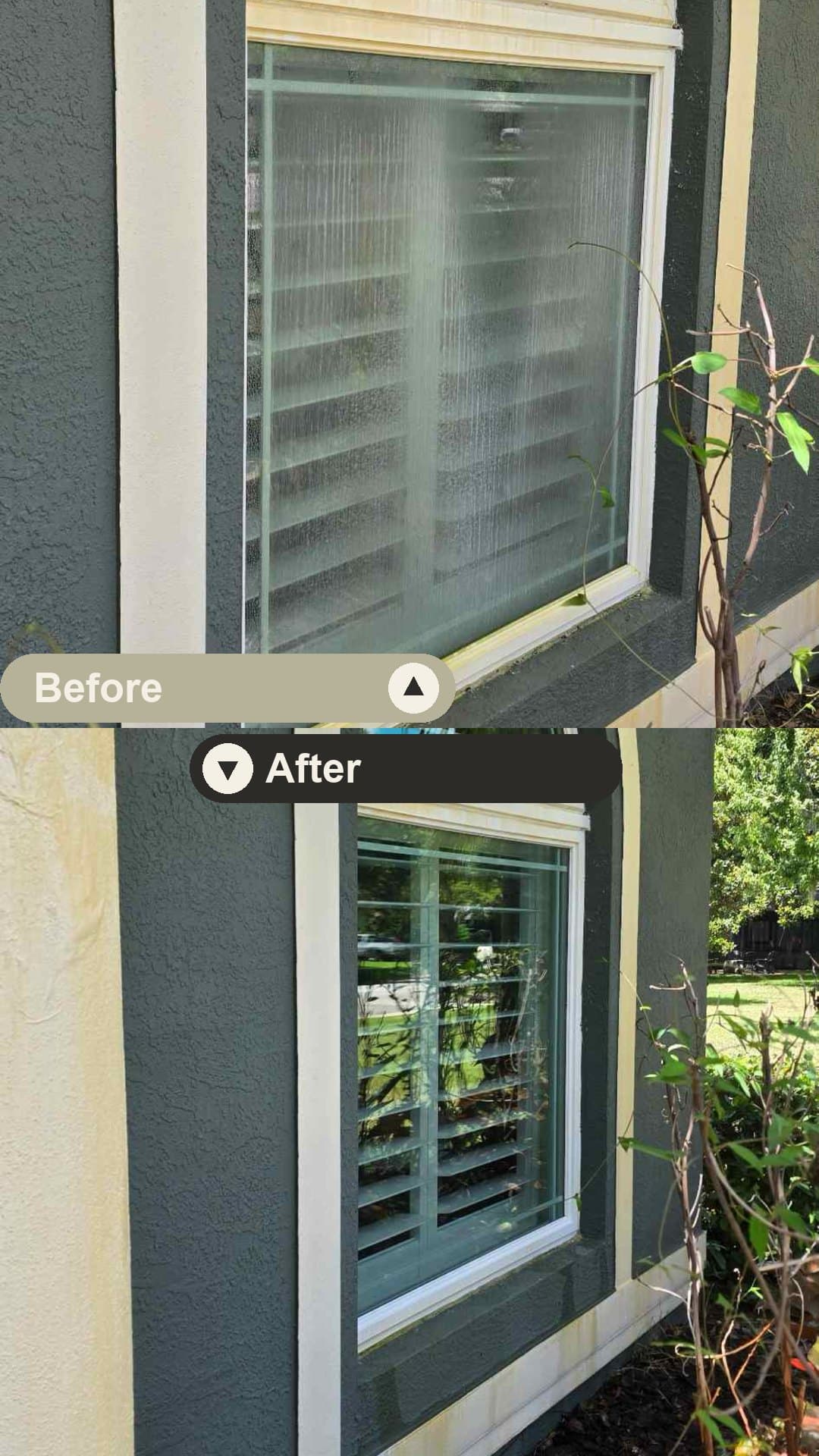
When hard water or sprinkler overspray lands on glass and dries, the water evaporates but the dissolved minerals — calcium, magnesium, and silica — stay behind and bond to the surface. Over repeated cycles they build into the cloudy white spotting and hazy film you see. In Florida, the two biggest sources are irrigation sprinklers hitting the windows and coastal salt air.
Why regular cleaning won't remove them
Soap, squeegees, and glass cleaner are designed for dirt — they slide right over bonded mineral deposits without touching them. That's why your windows can look streaky and cloudy right after they've been “cleaned.” And a critical warning: do not pressure wash hard water stains. High pressure won't break the mineral bond and can worsen the etching and damage the frames.
The real danger: permanent etching
Hard water staining isn't just cosmetic. Left untreated, the minerals slowly etch into the glass surface itself — and once glass is etched, no amount of cleaning brings it back. The longer the spotting sits, the harder it becomes to fully restore. Caught early, it lifts cleanly; ignored for years, it can become permanent. That's why it's worth addressing as soon as you notice the haze.
How professionals remove hard water stains
Glass restoration is a controlled, multi-stage process:
- Assess the severity to confirm the glass can be restored and choose the right approach.
- Dissolve the deposits with a professional-grade treatment that breaks the calcium and silica bond.
- Gently polish the surface with restoration compounds that lift even heavy staining without scratching the pane.
- Seal and protect so the restored glass resists future spotting.
The result is glass that comes back crystal-clear and smooth to the touch — usually for far less than the cost of replacing the windows.
How to prevent them in Florida
- Adjust irrigation so sprinklers don't spray directly onto the glass
- Dry or squeegee windows after they get wet, before the minerals can set
- Schedule periodic professional cleaning, especially near the coast
- Add a protective glass treatment after restoration to slow respotting
The bottom line
If your windows have gone cloudy or spotted, don't scrub harder and don't pressure wash them — have them assessed before the staining etches in. Fresh Frames restores hard-water and oxidation-stained glass across Florida, backed by our Spotless Promise — free re-clean within 72 hours.
Done scrubbing? Have it removed for good.
Tell us your home size and how bad the spotting is — our instant estimate returns an honest range for professional hard-water removal in about 60 seconds. If it's already etched, we'll tell you straight and quote restoration instead.
Frequently asked questions
What causes hard water stains on windows?+
Mineral deposits — calcium, magnesium, and silica — left behind when hard or sprinkler water dries on the glass. In Florida, sprinkler overspray and coastal salt air are the most common culprits.
Can hard water stains be removed from glass?+
Yes, in most cases — with a professional restoration process that dissolves the bonded minerals and gently polishes the glass back to clarity. The earlier it's treated, the more fully it restores.
Will vinegar remove hard water stains?+
Light, fresh spotting may respond to vinegar, but bonded or etched stains won't — and scrubbing with abrasive pads can permanently scratch the glass. Established stains need a proper restoration treatment.
Will pressure washing remove hard water stains?+
No. Pressure washing can't break the mineral bond, and the high pressure can actually worsen the etching and damage the glass and frames. Hard-water staining is a restoration job, not a pressure-washing one.
How do I prevent hard water stains on my windows?+
Keep sprinklers from spraying the glass, dry or squeegee windows after they get wet, and have them professionally maintained. A protective treatment after restoration helps the glass resist respotting.
Related: Glass scratch removal & restoration · Hard-water & oxidation removal · Exterior window cleaning · All window cleaning