
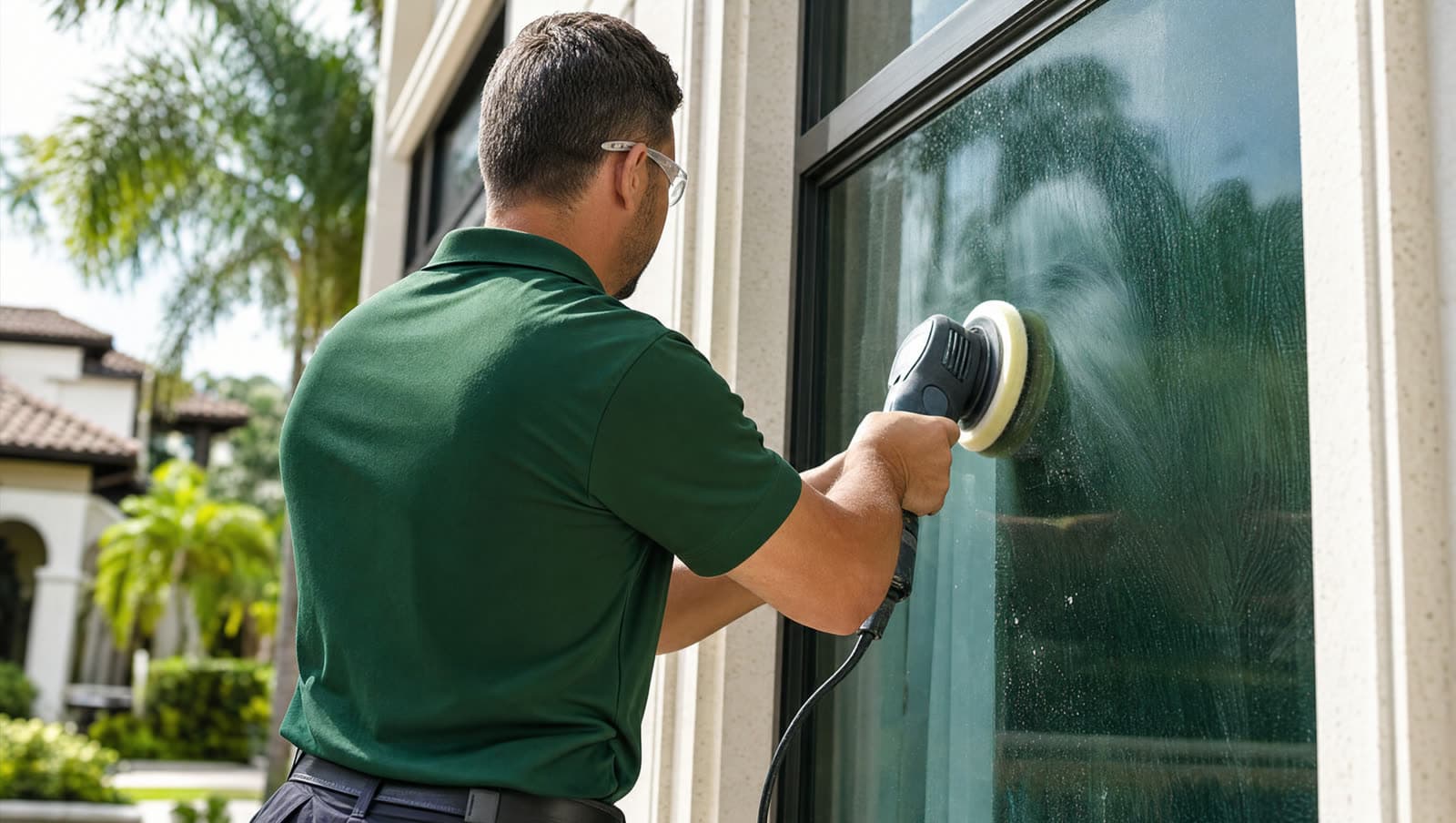
Process illustration.
Repair or replace? The 60-second answer
Run a fingernail across the scratch. If it glides over, that's a surface scratch — polishing brings the pane back to true clarity. If it catches, the old rule of thumb says "replace it" — but that rule costs homeowners a lot of unnecessary glass: professional resurfacing routinely saves scratches a DIY guide would call terminal. The only honest answer is an assessment — send us a photo or have us look while we're already there cleaning, and we'll tell you which side of the line your pane is on before anyone's on a ladder.
How we take scratches out of glass
Scratch removal is resurfacing, not filling. Our technicians work the damaged area with a progressive sequence of finer and finer abrasives, expanding a feathered work zone at every stage so the repair blends invisibly into the surrounding glass — never grinding one concentrated spot, which is what leaves the "fun-house mirror" distortion cheap kits and handymen produce. We monitor surface temperature throughout (heat discipline matters, especially on tempered and impact glass) and finish with an optical-grade cerium oxide polish that returns the pane to true clarity. Then we check our own work the way you would: sighting through the glass at a lined background, moving side to side, looking for any waver.
Light scratches can be done in about an hour; deeper damage takes longer — either way you keep your glass, your tint match, and your afternoon, with no tear-out, no boarded-up opening, and no waiting on a fabrication order.
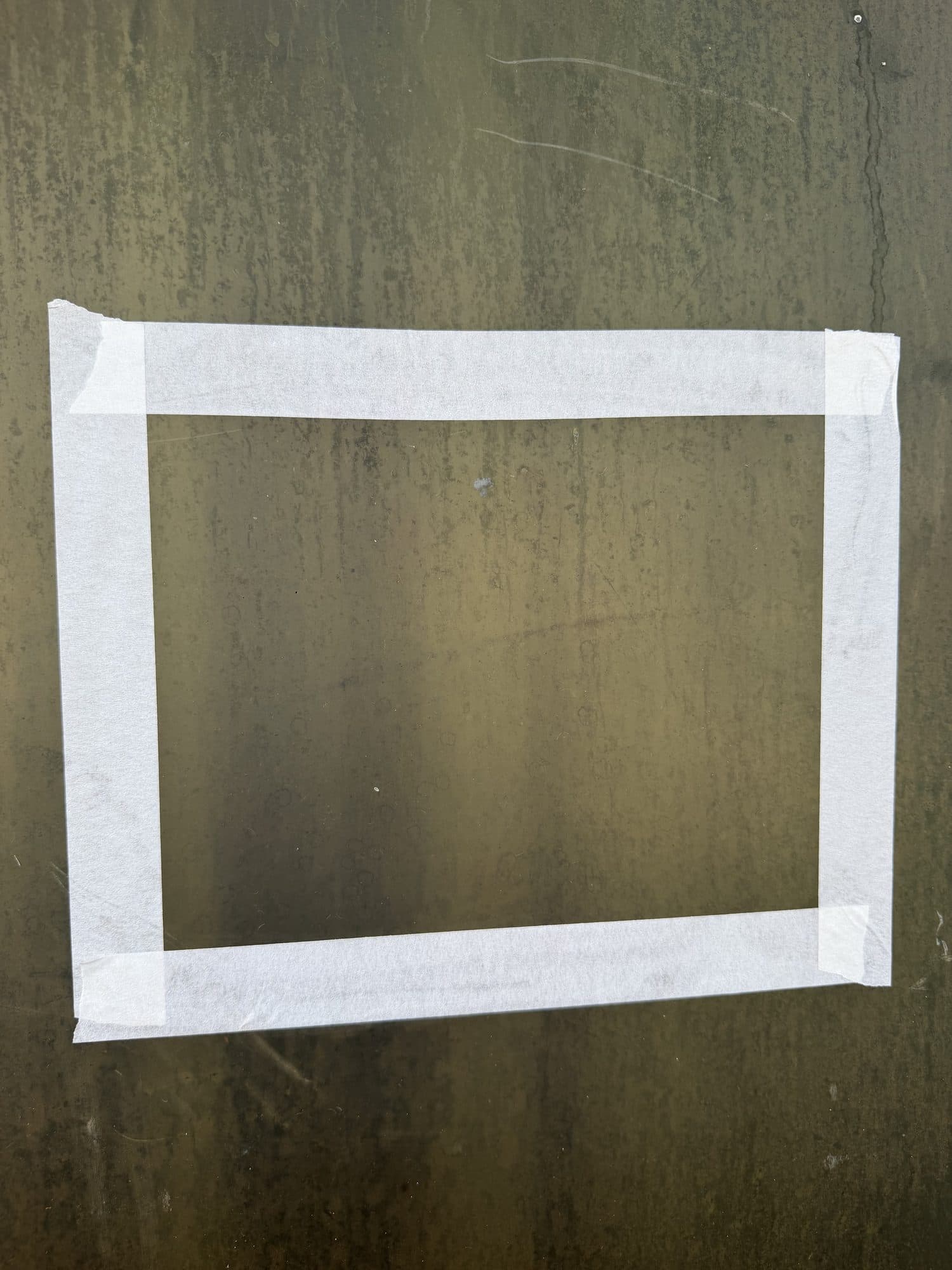
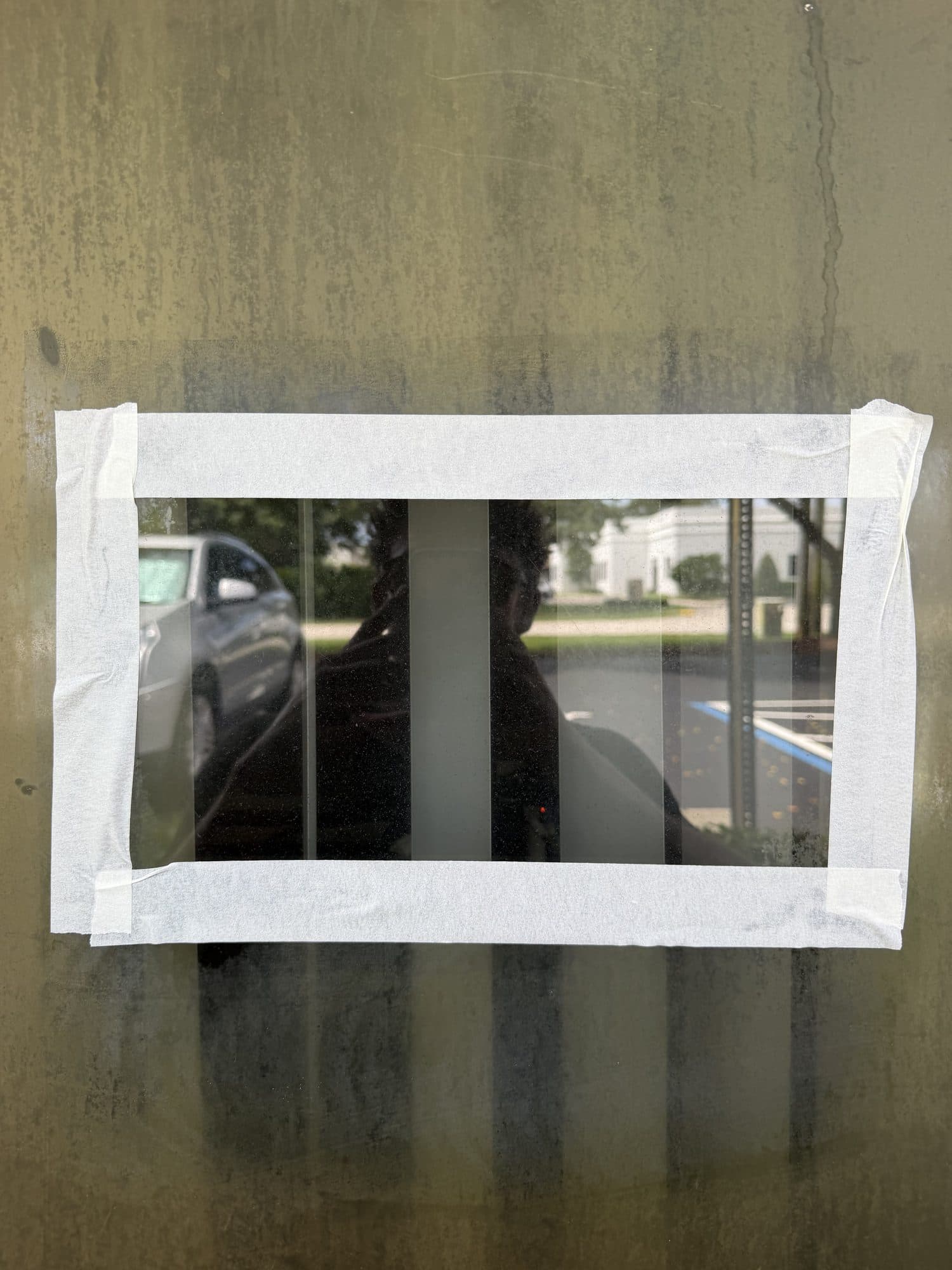
Real result: a restoration test patch on a Florida storefront. The treated area comes back crystal-clear while the untreated glass around it stays hazy.
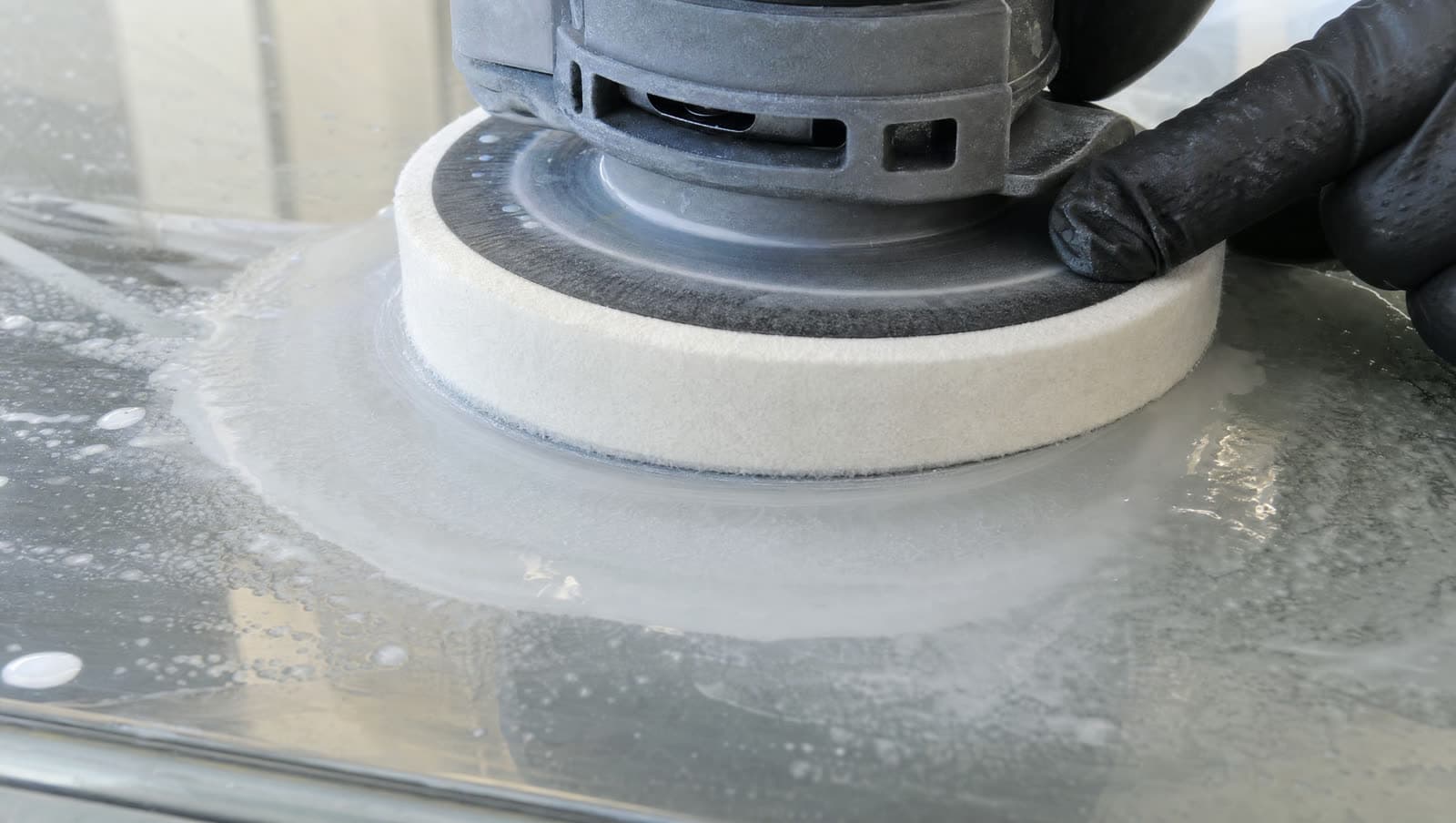
Process illustration.
What we can fix — and what we can't
Honesty first, because not every pane can be saved — and you deserve to know before anyone's on a ladder. We can usually fix: surface and mid-depth scratches (including many that catch a fingernail), razor and trade damage from construction cleanup, pet scratches on sliders, weld-spark pitting, acid-etched graffiti on storefronts, and glass dulled by years of coastal wear. We can't fix — and won't pretend to: cracks, chips, or any fracture (that's structural — replacement is the only safe answer); fog or moisture between the panes of a double-pane window (that's a failed seal inside the unit — no amount of polishing the outside reaches it); and scratches on the coated face of Low-E glass, where polishing would strip the coating that makes the glass work. Very deep gouges, or damage at the edge of a tempered pane, sometimes fall past the safe-removal line — we'll measure, tell you plainly, and point you to replacement when that's the smarter spend.
Sliding glass door scratch repair — Florida's most common ask
Half the glass scratch repair calls we get are the same story: a big slider, a dog who asks to come in at nose height, gritty tracks that drag debris across the pane, or a moving crew that got one corner wrong. Sliders are also the most expensive panes in the house to replace — big tempered sheets, often tinted, and in coastal counties the replacement must be impact-rated and permitted. Which is exactly why resurfacing them in place is the smart first question, not the afterthought. Send a photo; we'll tell you in a day whether yours is saveable.
Why Florida glass gets scratched
Florida is genuinely harder on glass than almost anywhere else. On the coast, salt air builds a film that — left long enough — chemically etches the surface into a permanent haze. Inland, sprinklers running on well water spray mineral-heavy droplets across the lower third of your windows day after day; caught early it's a stain we can clean, but left for seasons it bonds with the glass and becomes etching only resurfacing can remove. Every hurricane season we see the mechanical side too — panes scratched putting shutters up and taking them down, storm-debris scuffs, and squeegee damage on gritty sliders. And Florida's building boom delivers a steady stream of brand-new glass scratched before move-in: stucco dust under a razor blade, weld sparks, and fabricating debris on tempered panes. Different causes, same ending — glass you squint through. We diagnose which one you have (stain, etch, or scratch) at no charge: staining is often a cleaning fix, scratches and etching are a resurfacing fix, and we'll tell you which.
The math: restoration vs. replacement in Florida
- Cost: professional restoration typically runs a fraction of replacement — industry-wide, often 50% or more in savings. We quote after a free assessment, never sight-unseen.
- The Florida kicker: in Miami-Dade, Broward, and Palm Beach counties, replacement glass generally must be upgraded to impact-rated glass and permitted. Restoration avoids the code upgrade and the permit entirely.
- Time: replacement fabrication can take weeks; restoration is done in a single visit, on-site, with no tear-out.
- Match: your existing tint, thickness, and look stay exactly as they are — no new pane that reads slightly different from its neighbors.
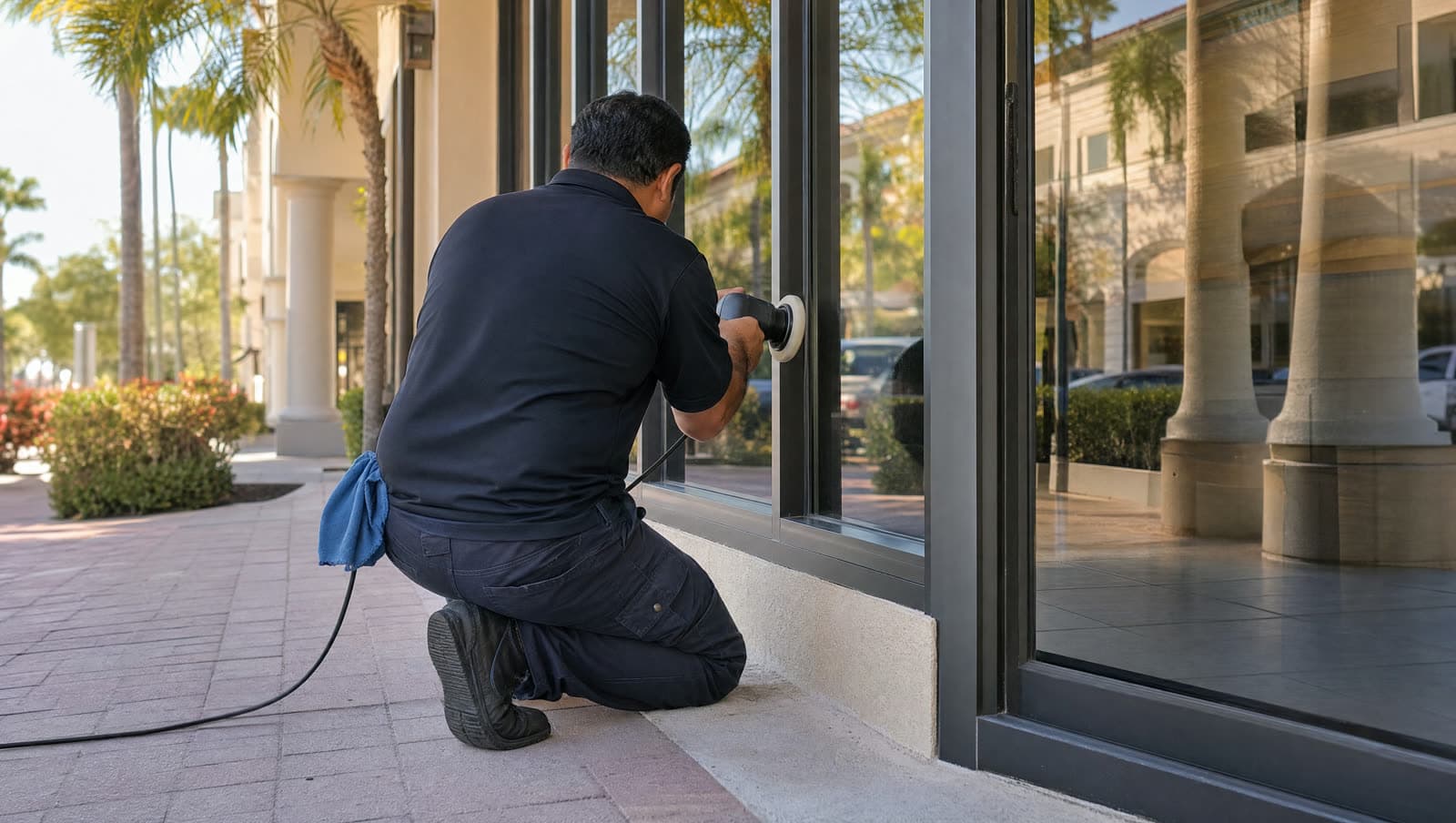
Process illustration.
For builders, GCs & property managers
Post-construction scratch damage — razor cleanup over stucco dust, weld sparks, fabricating debris on tempered panes — is one of the most common and expensive punch-list surprises in Florida's building boom. Resurfacing on-site protects your schedule (no fabrication lead time), your budget, and the handover date. We already run post-construction window cleaning and commercial post-construction cleaning crews across both coasts — scratch assessment is now part of the walk. For storefronts and commercial buildings, see commercial glass restoration.
Keep it clear: protection after restoration
Freshly polished glass is bare glass — re-exposed to the same sprinkler spray or salt air, it starts collecting minerals again. That's why every restoration ends with a protective coating recommendation and, for most homes, a simple maintenance rhythm: regular professional cleaning catches new buildup while it's still a stain instead of an etch. Restored glass plus a maintenance plan stays clear for years; restored glass alone fights the same battle again.
Frequently asked questions
Can scratches really be removed from glass?+
Yes, in most cases. Surface scratches polish out with an optical-grade cerium finish; deeper scratches are resurfaced with a progressive feathered grinding-and-polishing process. The industry rule of thumb is the fingernail test — but even scratches that catch a fingernail can often be professionally resurfaced. We confirm with a free in-person or photo assessment before any work.
Does toothpaste (or a DIY kit) remove scratches from glass?+
Mostly a myth. Toothpaste can soften a hairline scuff at best, and DIY abrasives routinely make things worse — uneven hand polishing creates visible distortion that's harder to fix than the original scratch. Professional resurfacing uses controlled pressure, expanding feathered passes, and temperature discipline specifically to avoid that.
How much does scratch removal cost compared to replacing the glass?+
Every pane is different, so we quote after a free assessment — but industry-wide, professional restoration typically runs a fraction of replacement, often 50% or more in savings. In Miami-Dade, Broward, and Palm Beach counties the gap is bigger: replacement glass generally must be upgraded to impact-rated glass and permitted, while restoration requires neither.
Can you fix scratches on tempered or hurricane-impact glass?+
Usually, yes — tempered and impact glass can be safely resurfaced when the damage is shallow enough and heat and depth limits are respected, which is exactly what a professional system controls for. Very deep gouges, or damage near the edge of a tempered pane, may not be safe to grind out; we'll tell you at assessment.
Will the repaired area look distorted?+
Not when it's done right. Distortion ("lensing") comes from grinding one concentrated spot; our process feathers an expanding work area and finishes with a cerium polish, then we sight-check the pane against a lined background before we call it done. If you can still see the damage, we make it right.
What can't be fixed?+
Cracks, chips, and fractures (structural — replacement only), fogging between the panes of a double-pane window (a failed seal; polishing the outside can't reach it), and scratches on the coated face of Low-E glass (polishing would strip the coating). We'll always tell you when replacement is the smarter spend.
Are you licensed and insured for glass scratch removal?+
Yes — general liability and workers' comp coverage on every crew, so you're covered while we're on your property. We're happy to provide proof of insurance before the job starts.
My window screens left circular scratch marks on the glass — can that be fixed?+
Yes — fine circular or arc-shaped scratch patterns are usually surface-level, caused by grit trapped between a screen and the pane or by a screen being slid across the glass. That's exactly the kind of surface damage our cerium polish resurfaces on-site, typically without needing the deeper feathered process reserved for gouges or trade damage.
Related: Residential glass scratch removal · Commercial glass restoration · Hard water stain removal · Reviews · Boca Raton · Fort Lauderdale · Tampa